 Skip to content
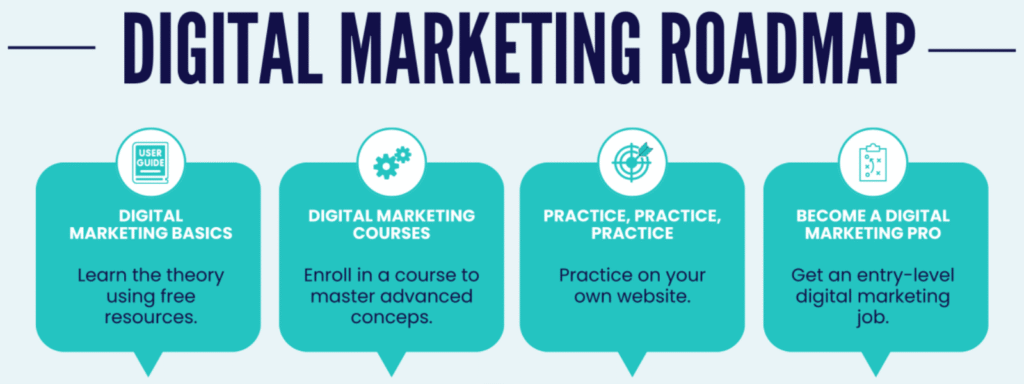
Table of Contents
ToggleWhat should you learn first in digital marketing?
This is one of the most common questions students ask when they start exploring this field.
Many students open YouTube, search for digital marketing tutorials, and suddenly see dozens of topics—SEO, social media, ads, analytics, content marketing, email marketing, and many tools. Instead of clarity, they feel overwhelmed.
The truth is simple: digital marketing becomes easy when you learn it in the right order. When you understand the sequence, each topic connects logically and learning becomes smoother.
This article will guide you step by step so you understand what to learn first in digital marketing and why the order matters.
Why Students Feel Confused When Starting Digital Marketing?
Digital marketing looks exciting, but beginners often feel lost because there are too many topics at once.
Students usually start learning randomly. One day they watch a video on Instagram marketing. The next day they try Google Ads. After that they read about SEO tools.
This scattered learning creates confusion because digital marketing is a system, not a collection of independent skills.
Common mistakes students make:
- Jumping directly into tools without understanding concepts
- Trying to learn ads before understanding websites
- Watching random tutorials without a roadmap
- Focusing only on social media
When learning is random, it feels difficult. When learning follows a structure, it becomes logical.
What Should You Learn First in Digital Marketing?
To remove confusion, you must understand the natural learning flow. Digital marketing modules should build on each other step by step.
The correct starting point is understanding how digital marketing works as a system.
Students should begin with fundamentals before moving into tools or platforms.
Learn Digital Marketing Fundamentals
Before learning SEO or ads, you must understand the foundation.
Digital marketing fundamentals explain how businesses attract customers online and how different platforms work together.
Important concepts you should learn first include:
What digital marketing actually means
- How people search for information online
- Difference between organic marketing and paid marketing
- Understanding customer journey (awareness → interest → purchase)
These concepts help you understand why marketing activities are done, not just how.
Without fundamentals, tools feel confusing.
Understand How Websites Work
Once the fundamentals are clear, the next step is understanding websites.
A website is the center of digital marketing. Almost every campaign eventually sends users to a website.
Students should learn:
- What is a domain and hosting
- How websites are structured
- What a landing page is
- How websites capture leads
You do not need coding knowledge in the beginning. You just need to understand how websites function.
When you understand websites, you can see how marketing activities drive visitors and convert them into customers.
Learn Search Engine Optimization (SEO)
After understanding websites, the next logical module is SEO.
SEO teaches you how websites appear in Google search results.
Students should focus on learning:
- How search engines work
- What keywords are
- How to structure website pages
- Basic on-page optimization
SEO helps you understand user behavior because it shows how people search for information.
Learning SEO early improves your analytical thinking and helps you understand how digital traffic is generated.
Learn Content Marketing
Once SEO is understood, content marketing becomes easier.
Content marketing means creating useful information that answers people’s questions and builds trust.
Students should focus on learning:
- How to write blogs that solve problems
- How to structure headings clearly
- How to explain ideas in simple language
Content and SEO work together. SEO helps you find what people search for, and content helps you answer those questions.
Without content, SEO cannot succeed.
Learn Social Media Marketing
After understanding organic search and content, the next step is social media.
Many beginners want to start with Instagram or Facebook immediately, but it works better after learning the basics.
Social media marketing includes understanding:
- How different platforms work
- How to communicate with audiences
- How to create engaging content
Social media should support your overall digital marketing strategy rather than be the starting point.
Learn Analytics and Performance Tracking
The final step in the learning sequence is analytics.
Analytics tools help marketers measure performance and understand user behavior.
Students should learn:
- How to track website traffic
- How to understand visitor behavior
- How to measure marketing results
When analytics is studied after learning other modules, the numbers start making sense.
Without context, analytics feels confusing.
Why SEO Is an Important Early Skill?
SEO teaches you how people think when they search online.
For example, when someone wants to buy something or learn something, they usually type a question into Google.
Understanding this search behavior helps students learn how content should be created.
SEO also introduces you to concepts like:
- Search intent
- Keyword research
- Content optimization
- Website structure
These skills build the foundation for many other digital marketing activities.
When Should Students Learn Paid Advertising?
Paid advertising is powerful, but it should not be the first module.
Many beginners jump directly into ads because ads promise fast results. However, without understanding audience behavior and website structure, ads can waste money.
Students should learn paid advertising after they understand:
- How traffic works
- How websites convert visitors
- How audiences respond to content
Important advertising platforms include:
- Google Ads
- Facebook and Instagram Ads
Learning ads at the right stage helps students understand campaign strategy instead of just pressing buttons.
The Simple Learning Roadmap for Beginners
To remove confusion, remember this simple roadmap:
- Digital marketing fundamentals
- Website basics
- SEO (Search Engine Optimization)
- Content marketing
- Social media marketing
- Paid advertising
- Analytics and performance tracking
This sequence builds knowledge step by step.
Each module supports the next one.
Why Learning in the Right Order Matters?
Students who follow a structured roadmap gain confidence faster.
Structured learning helps you:
- Understand how modules connect
- Avoid confusion caused by random tutorials
- Build practical thinking skills
- Apply knowledge in real situations
Random learning creates frustration because information feels disconnected.
A clear roadmap saves time and energy.
Common Mistakes Students Should Avoid
Many beginners make the same mistakes when starting digital marketing.
Mistakes include:
- Trying to learn everything at once
- Depending only on tools instead of understanding concepts
- Skipping fundamentals and starting with ads
- Learning without practicing
Avoiding these mistakes makes learning smoother.
Final Thoughts: Start With Clarity, Not Tools
Digital marketing may look complicated at first, but it becomes simple when learned step by step.
The key is to start with understanding rather than tools.
When students follow the correct sequence—fundamentals, website basics, SEO, content, social media, ads, and analytics—learning becomes logical and confidence grows naturally.
Instead of asking “Which tool should I learn first?”, ask a better question:
What should you learn first in digital marketing so that everything else makes sense?
The answer is clear—start with fundamentals and build your knowledge step by step.
Want to Learn Digital Marketing in the Right Structure?
Learning digital marketing becomes much easier when someone guides you through the correct roadmap.
At BrandBizzTech, we teach digital marketing in a structured way so students understand how every module connects with the next.
Our 3-month and 6-month Digital Marketing Programs focus on practical learning, real understanding, and confidence building.
If you want to learn digital marketing the right way and avoid confusion, explore our course and start your journey with proper guidance.